In a dramatic shift in U.S Venezuelan relations, the top U.S. military commander for Latin America made a surprise visit to Caracas on February 18, 2026, holding high-level security talks with Venezuela’s interim leadership amid a rapidly evolving regional security landscape.
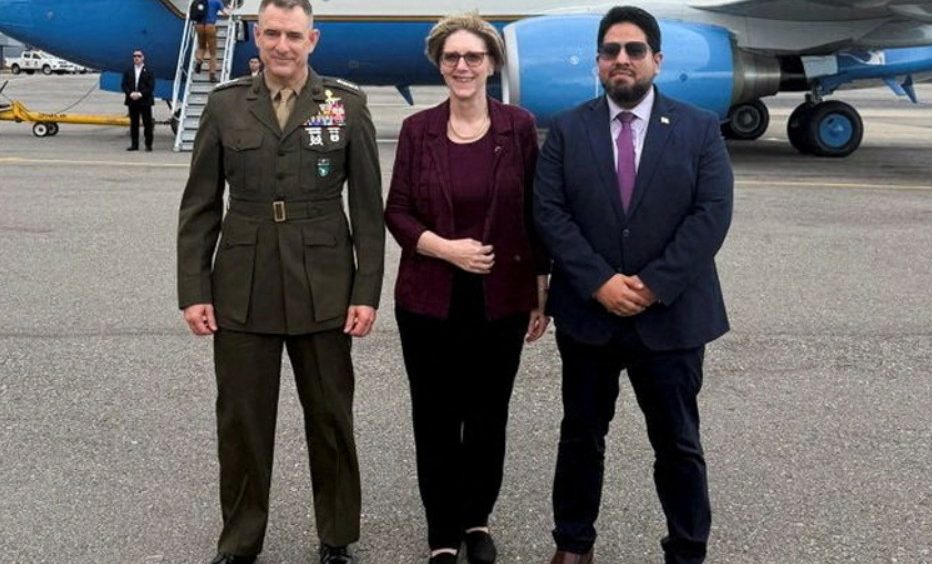
Marine Gen. Francis L. Donovan, newly appointed commander of the U.S. Southern Command (SOUTHCOM), arrived in Venezuela alongside senior Pentagon official Joseph M. Humire and U.S. diplomatic representatives for an unannounced diplomatic and security engagement.
Historic First Military Delegation Since Maduro’s Capture
The visit marks the first U.S. military delegation to Venezuela since U.S. forces captured former President Nicolás Maduro in a daring January operation and transported him to New York to face federal drug-trafficking charges an event that upended diplomatic ties between Washington and Caracas.
During the meetings, Donovan and the U.S. team met with interim President Delcy Rodríguez, Defense Minister Vladimir Padrino López, and Interior Minister Diosdado Cabello — all senior officials who now lead Venezuela’s transitional government.
Agenda Focused on Security Cooperation
Both governments emphasized cooperation on a range of pressing security issues:
- Combating illicit drug trafficking
- Counter-terrorism efforts
- Managing irregular migration across the hemisphere
Venezuelan officials highlighted that diplomacy must remain at the center of bilateral engagement, signaling a mutual interest in stabilizing relations after decades of strained ties.
Strategic Context and Broader U.S. Plan
U.S. military officials described discussions as centered on the security environment in Venezuela and across the Western Hemisphere, underscoring the importance of shared regional security goals. Talks also touched on the implementation of a three-phase plan laid out by the White House to stabilize Venezuela and integrate it more closely with U.S. strategic interests.
This visit follows a series of recent high-level American engagements with Venezuelan authorities, including visits by the U.S. Secretary of Energy and other senior U.S. officials moves interpreted by analysts as part of a broader U.S. diplomatic and security strategy in the region.
Reactions and Regional Implications
The unexpected military-diplomatic mission unfolded amid ongoing U.S. naval operations in the Caribbean targeting narcotics trafficking actions that have drawn both praise and criticism from international observers. The engagement in Caracas signals a possible recalibration of U.S. foreign policy priorities in Latin America, especially following years of severed ties with Venezuela’s prior leadership.
Looking Ahead
As Caracas and Washington navigate this new chapter of engagement, analysts will be watching for how security cooperation evolves and whether this visit could pave the way for broader diplomatic and economic cooperation between the two countries. For now, the surprise visit by Gen. Donovan represents a significant milestone in bilateral relations that were long defined by mutual distrust and geopolitical tension.